Last updated November 22, 2026
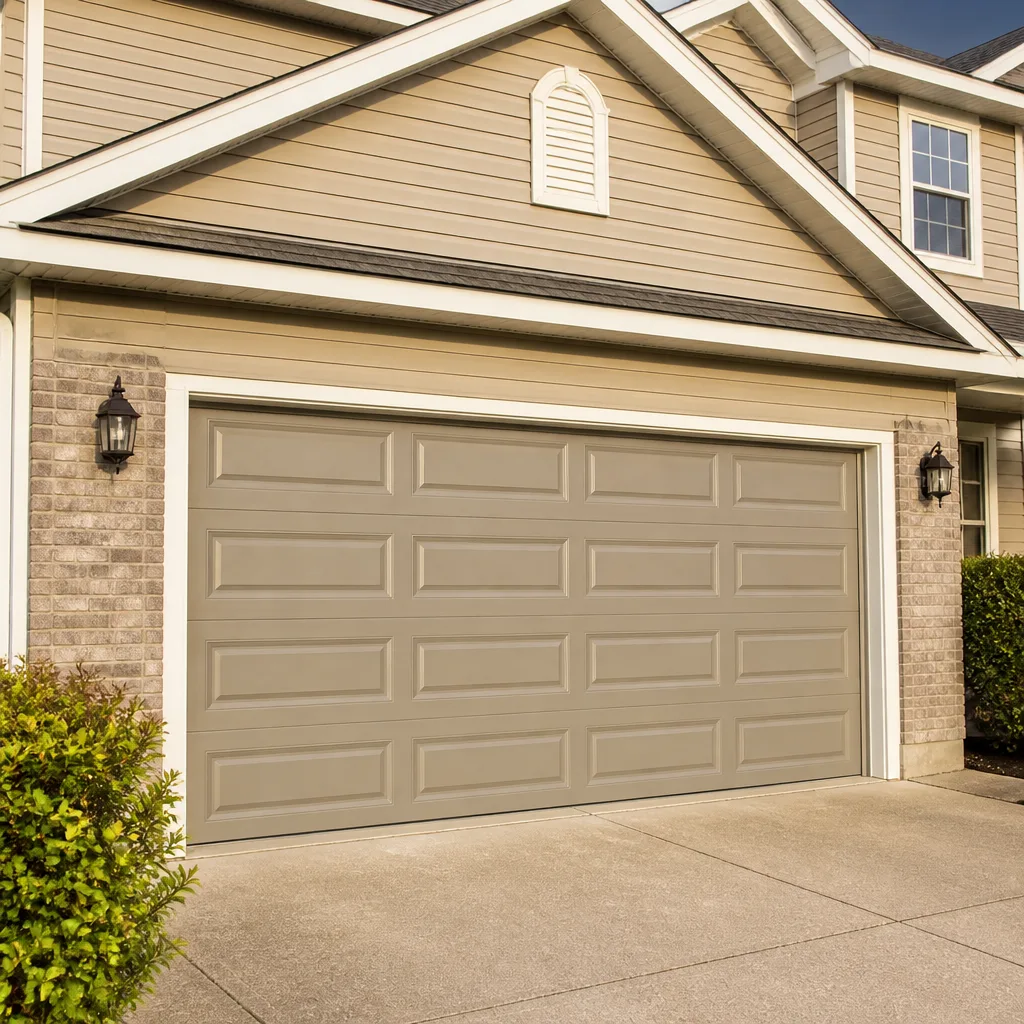 Raised-panel steel
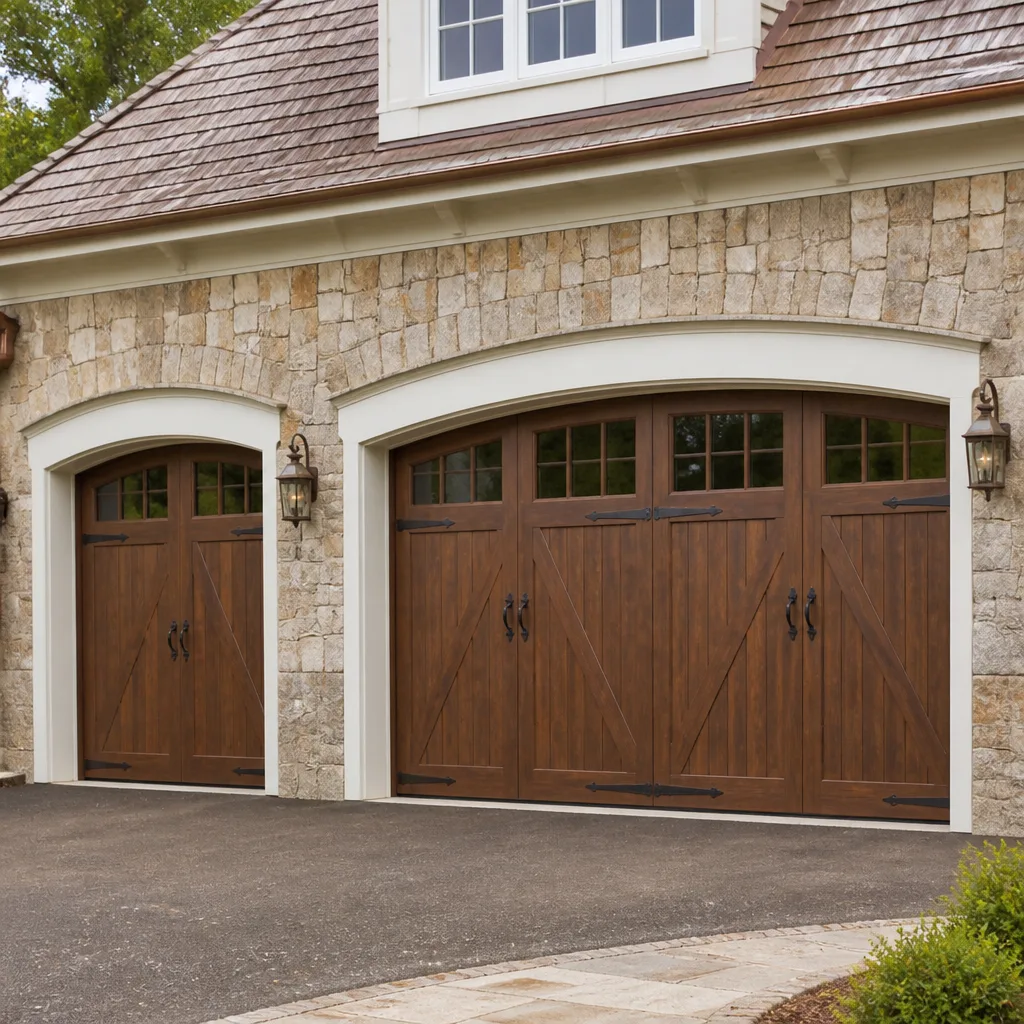 Carriage house
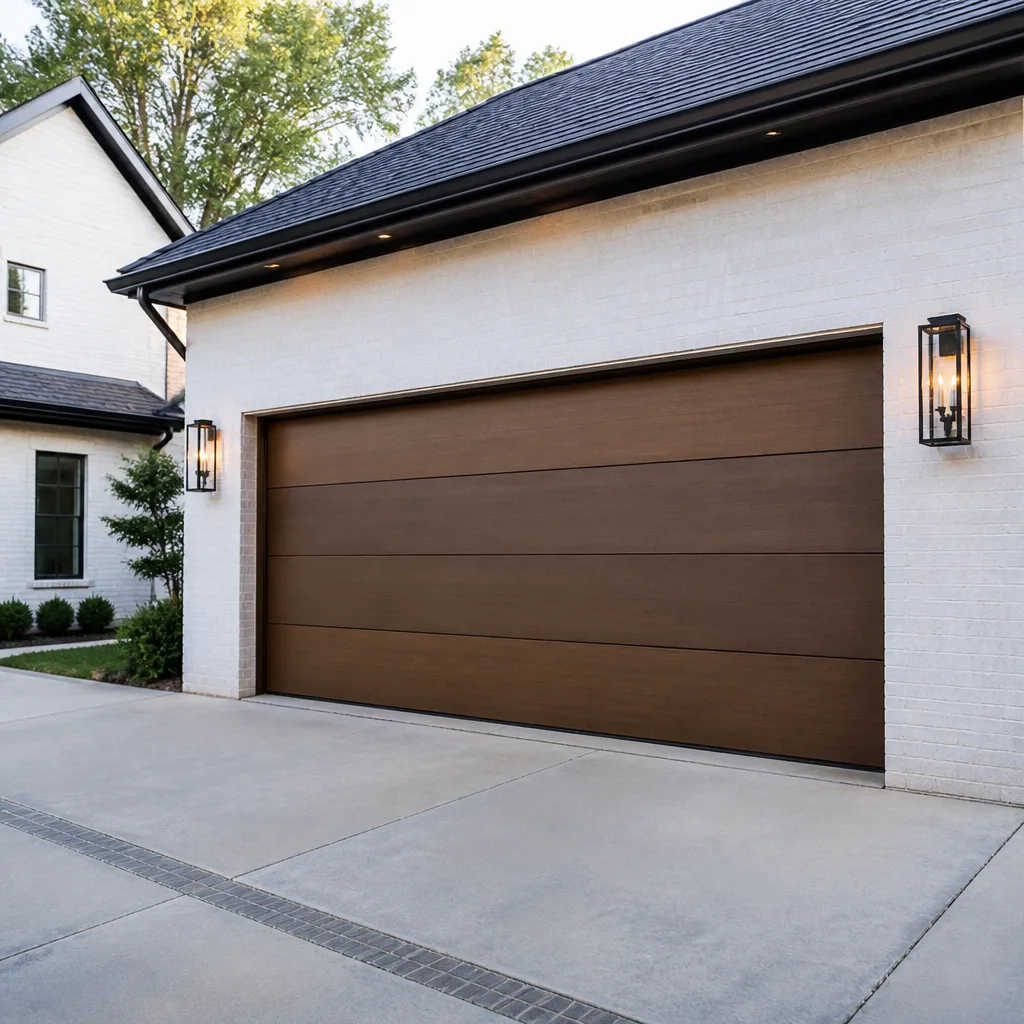 Modern flush
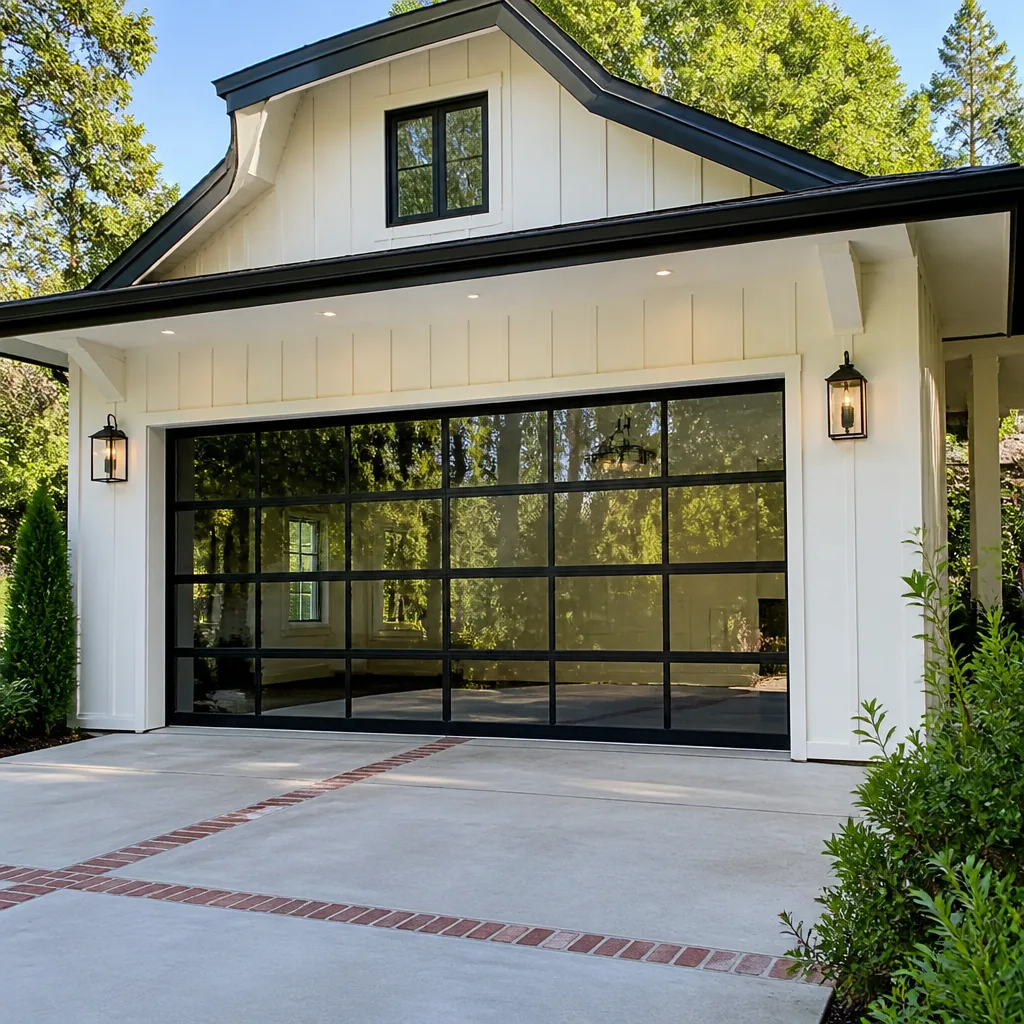 Full-view glass
 LiftMaster openers
 Chamberlain openers
Full 25-point door and opener safety check with every visit - springs, cables, rollers, tracks, and your LiftMaster or Chamberlain opener included
You get a price before we start. It does not change when the pro arrives.
Get your free estimateGarage Door Permits, Codes & Inspections in Miami Gardens, FL: What You Need to Know
Most homeowners assume a garage door is like a light fixture: buy it, hang it, done. In Miami Gardens, it isn’t. Miami-Dade County treats a garage door as part of the building’s wind-load envelope, which means the paperwork often matters more than the panels. A door that looks like a simple swap can trigger a permit, an inspection, and a product-approval check most buyers never hear about until a sale is on the line. This guide walks you through when a permit is required, how the county’s product approval system works, what inspectors actually look at, and how to fix a job that was done without one.
Quick Answer
In Miami Gardens and the rest of Miami-Dade County, a full garage door replacement requires a building permit, and so does any change to the door’s wind-load rating or structural anchoring. Opener-only work usually does not require a permit, and spring replacement does not either. Every new door installed in Miami-Dade must carry a valid product approval (an NOA) for the design pressure of its address, and the installation must pass a final inspection before the permit is closed.
Styles & brands we work with
- Raised-panel steel
- Carriage house
- Modern flush
- Full-view glass
- LiftMaster openers
- Chamberlain openers
Table of Contents
- Why Miami-Dade County Treats Garage Doors Differently
- When Is a Garage Door Permit Required in Miami Gardens?
- The Notice of Acceptance (NOA) System Explained
- Rough-In vs. Final Inspection: What Each One Covers
- Wind-Load Zones Across Miami Gardens and the Ratings Required
- The Permit Process, Step by Step
- What Happens When a Violation Surfaces at Resale
- Code, Safety, and Routine Upkeep After the Permit Closes
Why Miami-Dade County Treats Garage Doors Differently
Miami-Dade has its own building code, separate in important ways from the Florida Building Code that governs most of the state. The county’s Product Control section reviews and approves building components for wind resistance, and the garage door is one of the largest unbraced openings on a house. When wind pressure builds against a closed door, the load transfers through the panels, into the tracks, through the hinges, and down into the jambs and the concrete. If any link in that chain is undersized or installed with the wrong fasteners, the door can fail as a unit.
That’s why the county cares about the door itself, not just the opening. A door rated for one design pressure installed in a location that requires a higher one is a code problem even if it looks perfect and operates smoothly. And because Miami Gardens sits in a part of the county with high design wind speeds, the threshold for what counts as a “simple replacement” is lower than most homeowners expect.
In our experience across Miami Gardens, the confusion usually starts when a homeowner is replacing a door that failed, or upgrading an older builder-grade model. The new door may be better in every measurable way and still fail the paperwork stage because the model isn’t approved for the address, or the install used fasteners that don’t match the approval drawings.
When Is a Garage Door Permit Required in Miami Gardens?
The short version: full door replacement needs a permit. Opener replacement usually does not. Spring work does not. Anything that changes the wind-load rating, the size of the opening, or the structural attachment needs a permit and an inspection.
Work That Requires a Permit
- Full garage door replacement. Removing an existing door and installing a new one, regardless of whether the opening dimensions change.
- Changing the door size. Widening, raising, or altering the rough opening to fit a different door.
- Structural changes to the opening. Modifying headers, jambs, or the wall above the door.
- Replacing the door and track assembly together. New tracks and hardware change the anchoring pattern, which affects wind resistance.
- Any upgrade that changes the wind-load rating. Even where the footprint stays identical, a rating change is a permit event.
Work That Usually Does Not Require a Permit
- Opener replacement. Swapping a LiftMaster or Craftsman unit for a comparable model is a mechanical and electrical task, not a structural one. Confirm with the county if the opener involves new wiring runs to the panel, since electrical work can have its own permitting threshold.
- Spring replacement. Torsion and extension springs are wear components. Replacing them doesn’t change the door’s wind rating or structural attachment. This is also the most dangerous garage door repair there is, which is why we treat it as its own service and never rush it.
- Panel replacement within an existing door. Here it depends. If the replacement panel is the same model and same rating, most jurisdictions treat it as repair. If a panel changes the door’s rated assembly, the county can require a permit. This is the gray area where homeowners get surprised.
- Routine adjustment and lubrication. No permit, no inspection.
The threshold is lower than people assume. In Miami Gardens, a homeowner who replaces two dented panels on a Wayne Dalton door to “tidy things up” can find themselves on the wrong side of the requirement if the replacement panel isn’t the exact approved assembly. When in doubt, ask your city’s building department before ordering. It’s a five-minute call that saves months of paperwork.
The Notice of Acceptance (NOA) System Explained
Every garage door installed in Miami-Dade County needs a Notice of Acceptance. An NOA is the county’s document confirming that a specific product has been tested and approved for use under specific conditions, at specific design pressures, with specific installation methods. It isn’t the manufacturer’s spec sheet and it isn’t the Florida Product Approval number. It’s a Miami-Dade document, and it names the product model, the design pressure it can resist, and the fastening pattern required.
How to Look Up Whether a Door Model Is Approved
- Get the exact model number from the manufacturer’s label on the door or the paperwork. Not the series, the full model number.
- Go to the Miami-Dade County Product Control search tool online. Search by manufacturer name and product category (“garage doors”).
- Open the NOA and read the scope. Confirm the model, the maximum design pressure, and the limits on size and installation.
- Cross-check the design pressure against the requirement for your address (see the wind-load section below).
- Check the installation method in the NOA against how the door will actually anchor to your framing. Fasteners and spacing matter.
- Save the NOA number. Your permit application and your future resale disclosure both use it.
The brands we work with most often all publish NOAs, including Clopay, Amarr, Wayne Dalton, and Raynor. The complication isn’t usually the brand, it’s the exact model within the brand. A manufacturer’s catalog can have hundreds of combinations of panel, insulation, and hardware, and not every combination carries an NOA at every design pressure. When we pull a new door for a Miami Gardens home, we confirm the NOA before ordering and cross-check it against the model on the order confirmation. That step prevents the wrong door showing up and the job stalling at the inspection.
We work on the brand already in your garage, and that includes being able to trace the model back to its approval documentation. If the label is worn off, the county can sometimes help identify the model from photographs, but a missing label is a slow path.
Rough-In vs. Final Inspection: What Each One Covers
Garage door installations in Miami-Dade typically involve two inspection stages, though not every permit triggers both depending on how the job is scoped. The rough-in covers the structure and the anchoring. The final covers the finished assembly and the operational safety of the door.
Rough-In Inspection
A rough-in inspection happens before drywall or finishing work closes up the areas around the new door and track. What the inspector normally verifies:
- The door model matches the NOA on the permit.
- The framing members at the jambs, header, and track anchors match the approved installation drawings.
- Fasteners are the type and size specified in the NOA, spaced correctly.
- The opening dimensions match what was permitted.
- Sheathing and blocking behind the track anchors meet the structural requirements.
Final Inspection
The final inspection happens after the installation is complete and the door is fully operational. What the inspector normally verifies:
- The door operates smoothly through the full cycle, open to close and back.
- The opener (if new) is installed and functioning, and safety reversing is functioning as designed.
- The door balances correctly and stays in position when manually released halfway.
- The hardware matches the approved assembly (hinges, rollers, springs, bottom brackets).
- The door label (the wind-load label) is present and matches the NOA.
- No field modifications were made that aren’t covered by the approval.
Failed inspections are almost always paperwork or anchoring problems, not operation problems. A door that cycles perfectly can still fail the final because the NOA number on the application doesn’t match the door on the opening, or the fasteners were swapped for what the installer had in the box. Getting the permit application right the first time is worth the extra care.
Wind-Load Zones Across Miami Gardens and the Ratings Required
The wind requirement for a garage door is set by the design wind speed for the specific location, and it isn’t uniform across the city. Miami Gardens stretches from the neighborhoods around Northwest 27th Avenue east toward the Palmetto Expressway, and the design pressures shift block by block depending on exposure, terrain, and the surrounding building stock. A single address can’t be assumed to match its neighbor’s requirement. Two houses on the same street can require different ratings if one has more open exposure.
What you can rely on: the design pressure on your permit is determined by an address-specific calculation, using the design wind speed for that location, adjusted for exposure category, the height of the opening, and the effective wind area. The county’s building department can tell you the required minimum rating for your address, and a licensed contractor handling the permit will work out the exact figure. The NOA for the door you select must meet or exceed it.
How to Find the Rating for Your Address
- Identify your property’s design wind speed. The county building department can provide the figure for your address.
- Determine the exposure category based on the surrounding terrain. This is a technical calculation; your contractor will handle it as part of permit drawings.
- Get the required design pressure for the door’s effective wind area.
- Match the door’s NOA-rated design pressure. It must be equal or greater. A lower rating is a fail regardless of anything else.
- Confirm the anchoring pattern in the NOA matches the wall construction at your home. Block, stucco over frame, and wood-framed walls take different fasteners.
If someone quotes you a door without asking about your address before talking price, that’s a signal. The NOA and the design pressure for a Miami Gardens address have to be settled before the door leaves the manufacturer, not after. Installation done once, done right means the door arrives on site with matching paperwork, not hoping it will pass.
The Permit Process, Step by Step
Here’s how a typical garage door permit runs in Miami Gardens, from the first decision to the final inspection. Timelines vary with the county’s workload and with the complexity of the job, so treat these as the sequence, not a schedule.
- Confirm the door model and NOA. Before anything else, identify the door you’re installing and pull the NOA. Confirm the model is approved for the design pressure required at your address.
- Get the wind-load calculation. The permit application needs the design pressure for your address, determined from the wind speed, exposure, and door size.
- Prepare permit drawings. These show the opening, the door, the anchoring detail, and the NOA number. A licensed contractor prepares and submits this for you.
- Submit the permit application. To the Miami-Dade County building department. The county reviews the drawings and the NOA against its records.
- Receive the permit and any reviewer comments. Reviewers may ask for clarifications on the anchoring or the NOA scope. Respond quickly and the review closes.
- Order the door. Once the permit is issued. Order the exact model on the application. Do not substitute.
- Install and prepare for rough-in inspection. Install so that framing, fasteners, and blocking are visible for the rough-in inspection if the permit requires one.
- Final inspection. After the door is fully installed and operational, the final inspection is scheduled. The inspector verifies the model, the hardware, the label, and the operation.
- Close the permit. Once the final passes, the permit is closed. Keep the closing paperwork with your house documents. You’ll want it at resale.
We handle the sequencing for Miami Gardens jobs because a single missing NOA number or a misidentified door model on the application means the whole job waits in the county queue. Getting the permit right is not paperwork to be delegated to whoever answers the phone; it’s part of the job.
What Happens When a Violation Surfaces at Resale
An unpermitted garage door doesn’t stay quiet forever. It usually surfaces during a home sale inspection, when the buyer’s inspector notes the door’s installation or the absence of a permit in the county’s system. Title and disclosure requirements mean the seller typically has to resolve it before closing, and the resolution path is more expensive than the permit would have been at the start.
How to Resolve an After-the-Fact Permit
- Determine what was installed. Model, size, hardware, and whether the NOA matches the door that’s actually on the opening.
- Pull the current NOA for the installed model. If it doesn’t exist for the installed model at the required pressure, that’s a bigger problem and the door may need to be replaced with an approved model.
- Open an after-the-fact permit. The application is essentially the same as a new permit, with the additional burden of proving what’s already built.
- Expect inspections to be harder. Rough-in inspections can’t easily be done after the fact, so the county may require other verification or additional documentation.
- Make any corrections the county requires. Fasteners, blocking, or hardware that don’t match the approved pattern may need to be redone.
- Complete the final inspection and close the permit.
The after-the-fact path exists precisely because unpermitted work is common enough that the county needs a way to handle it. But it involves more inspections, more documentation, and slower timelines than a simple pre-permit installation. Where the door itself is unapproved, the cost can climb fast, because the door has to come out.
We’ve seen this play out across Miami Gardens, and the common thread is not that the homeowner was trying to skirt the rules. It’s that nobody told them the door needed a permit in the first place. A full replacement seems like an installation, not a construction project. The county doesn’t draw the line where the homeowner does.
Code, Safety, and Routine Upkeep After the Permit Closes
Once the final inspection passes and the permit closes, the door becomes a maintenance item. Code compliance doesn’t require ongoing inspections, but a door that passes inspection and then goes without attention for years is a door that fails sooner than it should. The spring, the rollers, the opener, and the safety reversing system all wear.
- Balance check. Release the opener and lift the door halfway. If it doesn’t stay put, the spring has lost tension or the door is out of balance. Stop operating it and get it looked at.
- Safety reversing. Place a small object in the door’s path while closing. The door should reverse on contact. If it doesn’t, the opener’s safety systems need service, and that’s a code concern, not an inconvenience.
- Spring age. Torsion springs are rated in cycles, and a busy household can run through that rating faster than expected. Springs don’t need a permit to replace, but they do need a professional. This is the most dangerous part of the entire system.
- Panel condition. Salt-carrying storms and sun exposure can degrade panels over time. If panels are being replaced, confirm they match the door’s original approval.
- Opener service. The leading opener brands (LiftMaster, Chamberlain, Craftsman, Genie) all have serviceable components. It’s often cheaper to repair a functioning opener than replace it.
For maintenance needs that go beyond what a homeowner should safely handle, that’s what garage door repair is for. We cover the door, the opener, the springs, and the panels on a single visit where the scope allows.
Common Mistakes to Avoid
- Assuming a panel swap is exempt. If the replacement panel doesn’t match the door’s approved assembly, the county can require a permit. Confirm the panel model number against the NOA before ordering.
- Buying a door without checking the NOA first. A door sold in Florida without a valid NOA for the required design pressure is uninstallable in Miami Gardens. It has to be returned, and the job waits.
- Substituting fasteners or anchoring. Installers sometimes use what’s on hand. The NOA specifies fastener type and spacing because the rated assembly depends on it. Substitutions fail inspections and put the door’s rating in doubt.
- Treating the opener as the permit problem. If a new opener requires a new electrical run, that’s the electrical side of the permit question, not the door. Confirm with the building department.
- Losing the closing paperwork. The permit close-out, the NOA number, and the final inspection result all matter at resale. Keep them with the house file along with your roof and impact window documentation.
- Assuming a licensed contractor is handling everything. Verify the permit application has been submitted and the NOA matches your door. Ask to see the permit number.
- Replacing springs without confirming the cycle rating. Springs are not all the same. A spring rated below the door’s weight and daily cycle count fails early. If you’re replacing, match the door, don’t match the price.
See the difference
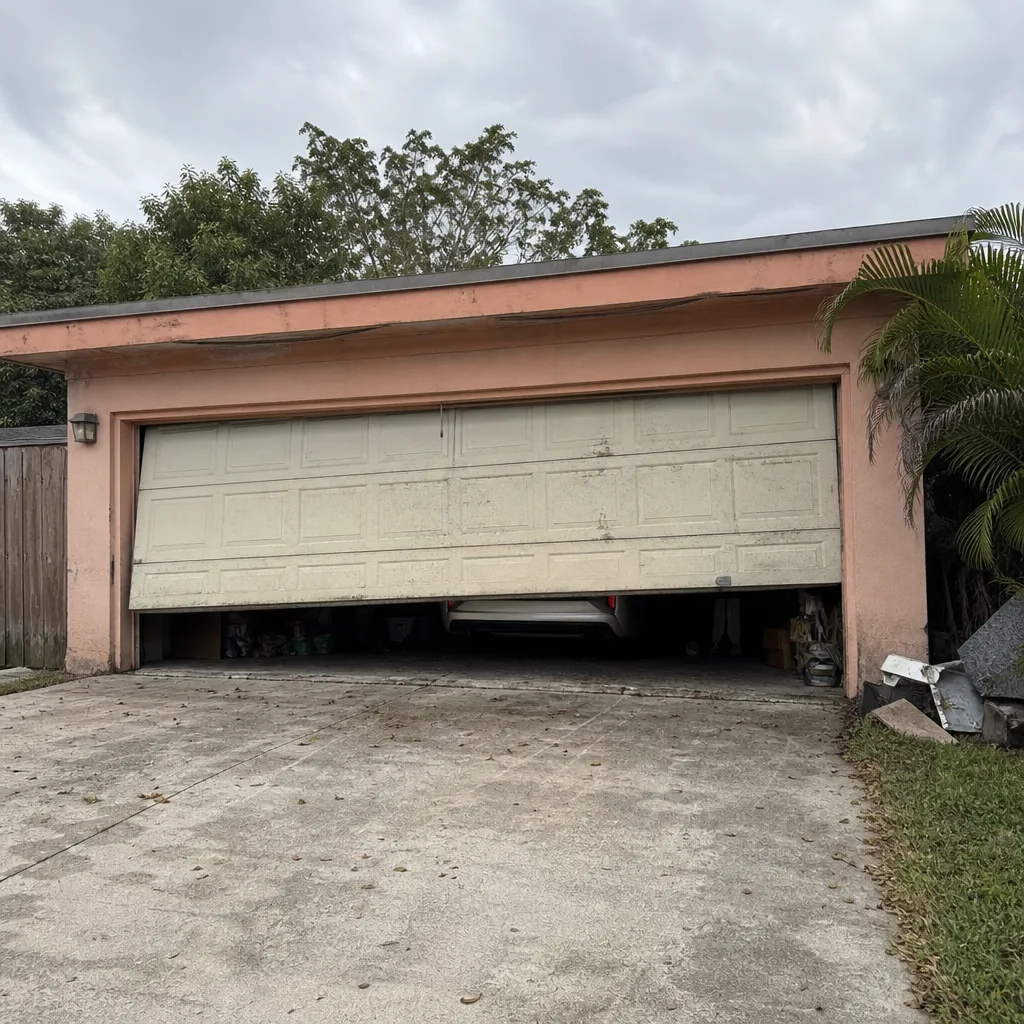 Before
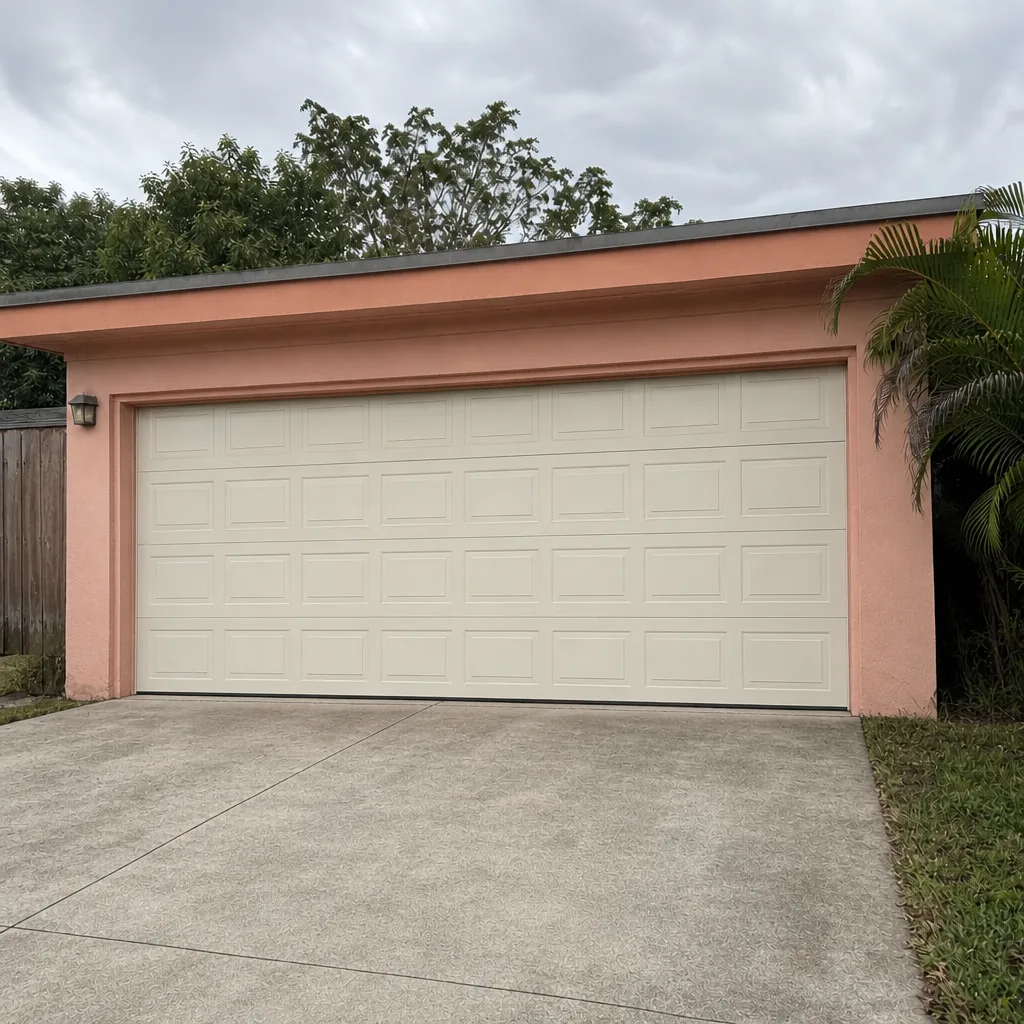 After
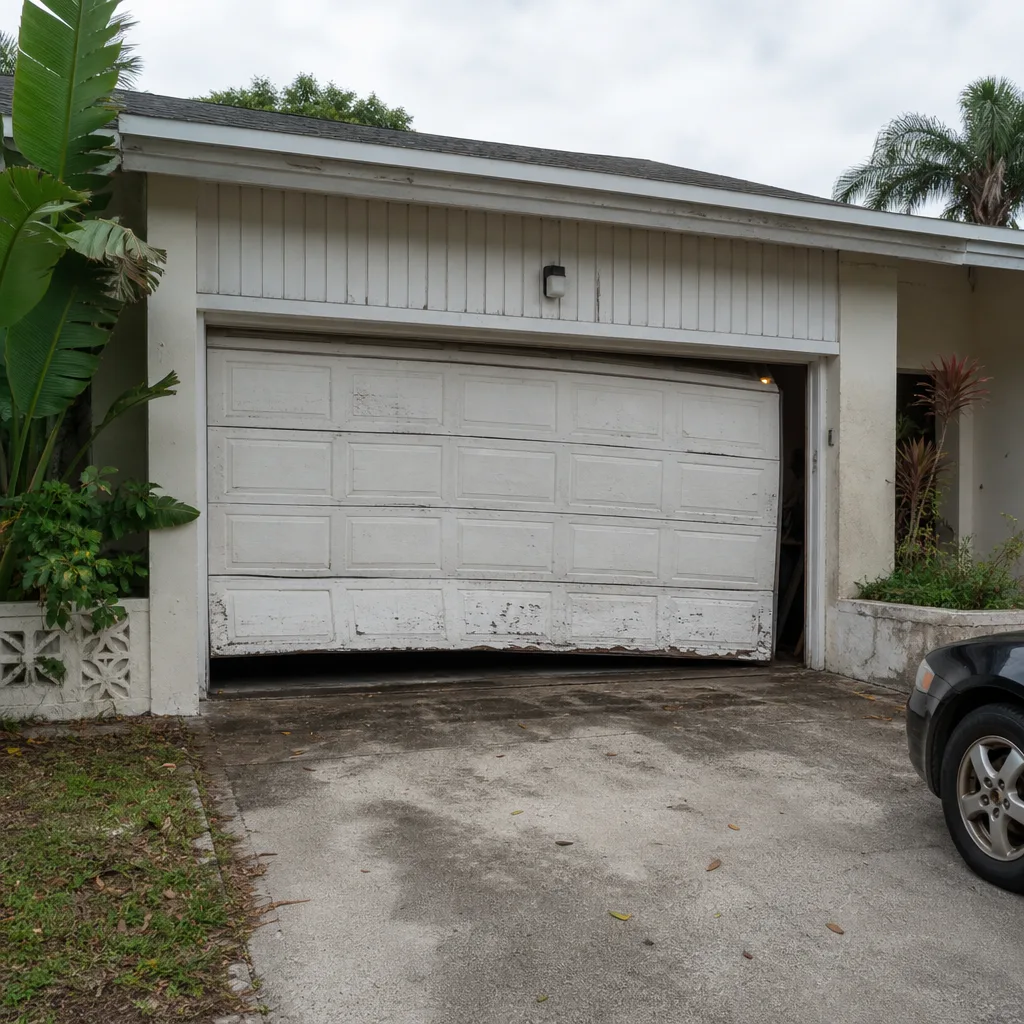 Before
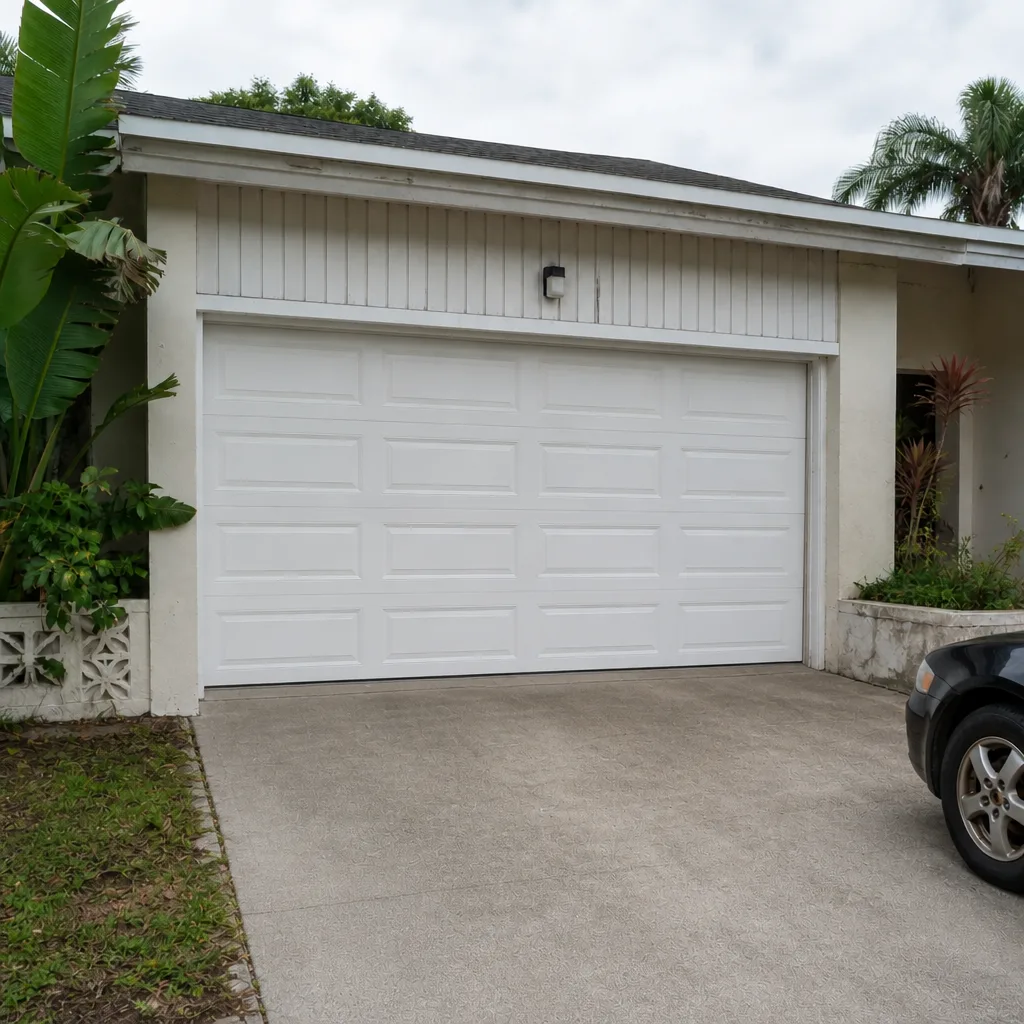 After
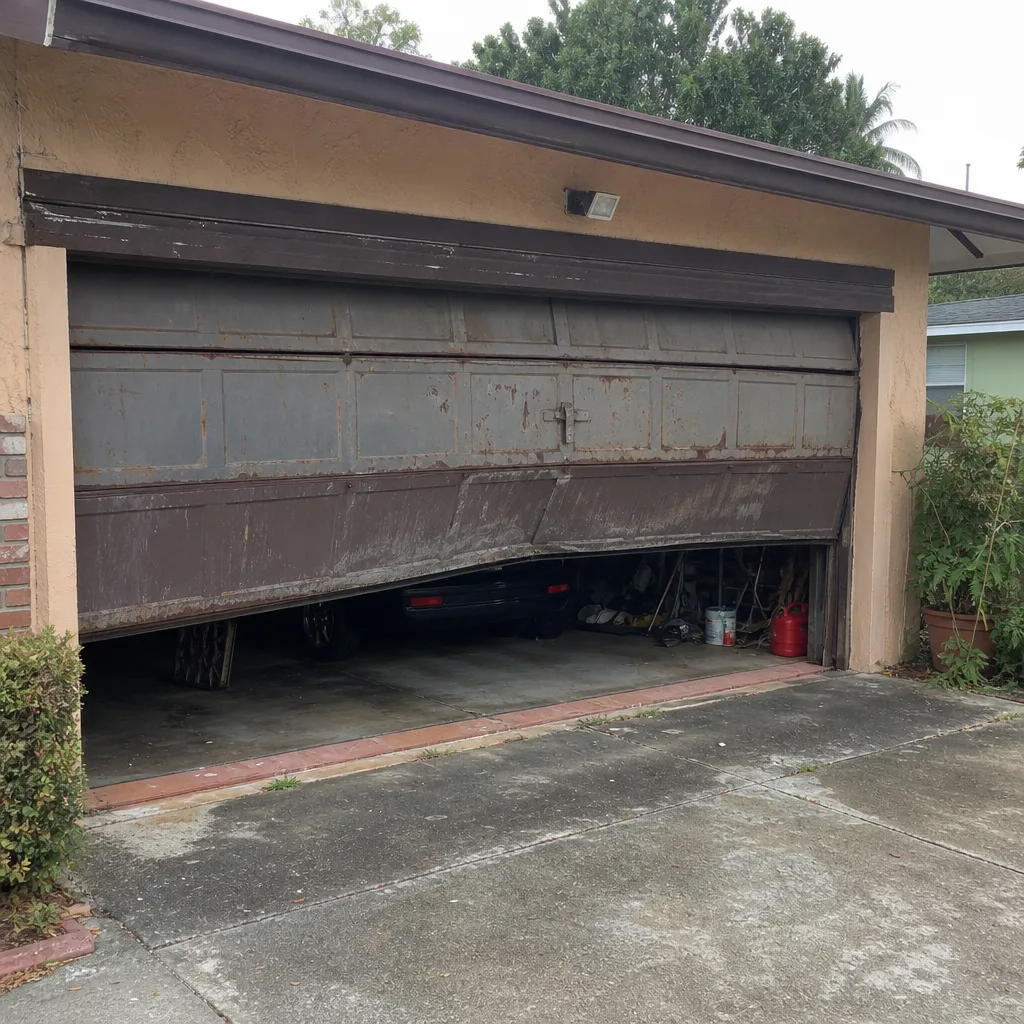 Before
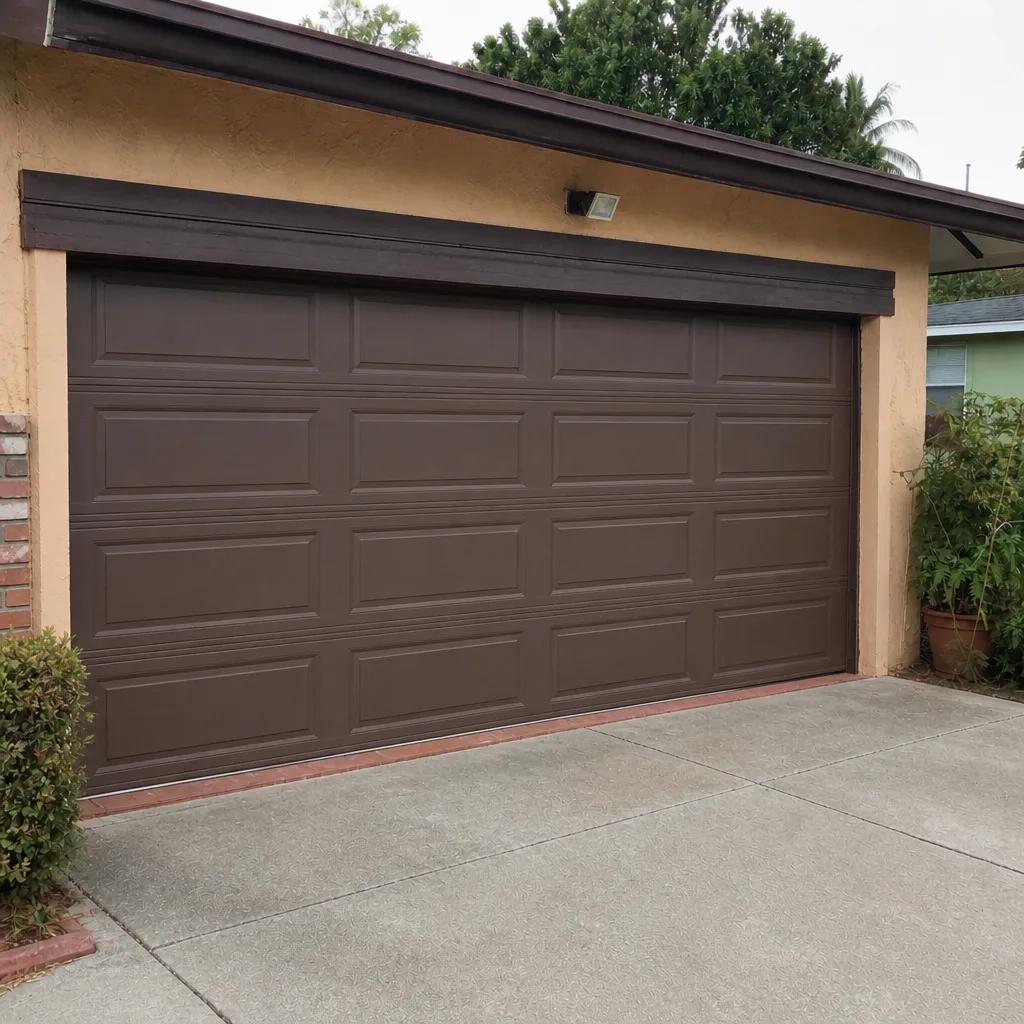 After
When to Call a Professional
Some jobs are homeowner maintenance. And some are not. Call us when the spring has snapped, when the door is off its tracks, when the opener runs but the door doesn’t move, or when the door won’t close at all because the safety reversing is failing. Call us before you install a new door, so the NOA, permit, and inspection are handled before the door is ordered. Call us before you replace a panel, if you’re not sure the replacement matches the original assembly. Call us when a home inspector flags something and you’re not sure if it’s cosmetic or code. Miami Gardens Garage Door Repair Pros offers free estimates in Miami Gardens – call (833) 468-5952.
Our technicians have up to 12 years of experience with the leading opener brands and door manufacturers. We work on the brand already in your garage. When the door won’t open or won’t close, that’s an emergency, and we treat it that way. For spring service, we treat it as a standalone, safety-first job. You can read more about that on garage door spring repair.
Frequently Asked Questions
Yes. A full garage door replacement requires a Miami-Dade County building permit, and the installation needs a final inspection to close the permit. The door must carry a valid NOA for the design pressure of your address. Call (833) 468-5952 for an exact quote – estimates are free.
Usually no. Opener-only replacement is a mechanical and electrical task, not a structural one, and doesn’t typically require a building permit. The exception is if the new opener requires a new electrical circuit or run, which can bring in electrical permitting. Confirm with the city’s building department before starting, and call (833) 468-5952 for our take on your specific setup.
No. Spring replacement is maintenance on a wear component and doesn’t require a permit or inspection. It does require a professional because torsion springs store enormous energy and can cause serious injury if mishandled. Call (833) 468-5952 to schedule a spring assessment.
An NOA is the Miami-Dade County Notice of Acceptance: a county-issued document confirming a specific garage door model has been tested and approved for use at specific design pressures with specific installation methods. Every new door installed in Miami Gardens must have an NOA matching its model and design pressure. Without one, the permit and the final inspection fail. Call (833) 468-5952 and we’ll confirm the NOA for your intended door before you order.
You can be cited for a code violation, and the unpermitted work typically surfaces at resale when the buyer’s inspector flags it. Resolution requires an after-the-fact permit, additional inspections, and sometimes removal and replacement of the door if it isn’t approved for the address. The after-the-fact path costs more than the original permit would have. Call (833) 468-5952 for a free estimate on getting the permit done right the first time.
Yes. We prepare the permit application, the drawing package, and the NOA cross-check, and we handle the rough-in and final inspection coordination as part of the installation. The permit fee is separate from our install quote and is set by the county. Call (833) 468-5952 for a free estimate that spells out what’s included.
No. We quote from the door model, the address, the required design pressure, and the anchoring needs up front, and the price you agree is the price we work to. The permit fee is a pass-through from the county, not a markup on our end. If the door needs to change to meet the NOA, we tell you before the order goes in, not after. Call (833) 468-5952 for an exact quote – estimates are free.
In most cases, yes. We work on LiftMaster, Chamberlain, Genie, Clopay, Amarr, Wayne Dalton, Craftsman, and Raynor. That means we’ve handled the specific approval documentation for the leading door brands, and we can usually repair your existing opener rather than push a replacement. Call (833) 468-5952 and tell us the brand.
The Bottom Line
Garage doors in Miami Gardens are governed by a stricter permit rule than many Florida homeowners expect. Full replacement needs a permit. Any wind-load change needs a permit. Opener-only and spring-only jobs usually don’t. Every new door needs an NOA valid for the design pressure at your address, and the installation has to pass inspections before the permit closes. None of this is optional, and none of it is difficult if it’s handled before the door is ordered. It becomes expensive when it’s discovered at resale. If you’re planning a replacement, get the NOA and the permit settled first, then order the door. That order is the entire secret.
Contact
Miami Gardens Garage Door Repair Pros handles the full scope: garage door repair, garage door opener repair, spring repair, full door installation, and emergency response when a door won’t open or won’t close. We work on the brand already in your garage and cover the leading door manufacturers and opener brands. Whether you’re replacing a door that’s past its service life or dealing with a snapped spring, we’ll walk you through the diagnosis, the permit requirements for your address, and the price before any work starts. For a free estimate, call (833) 468-5952. You can also start at our Miami Gardens Garage Door Repair Pros home page to see the full range of what we do.
Written by the team at Miami Gardens Garage Door Repair Pros.