Last updated November 22, 2026
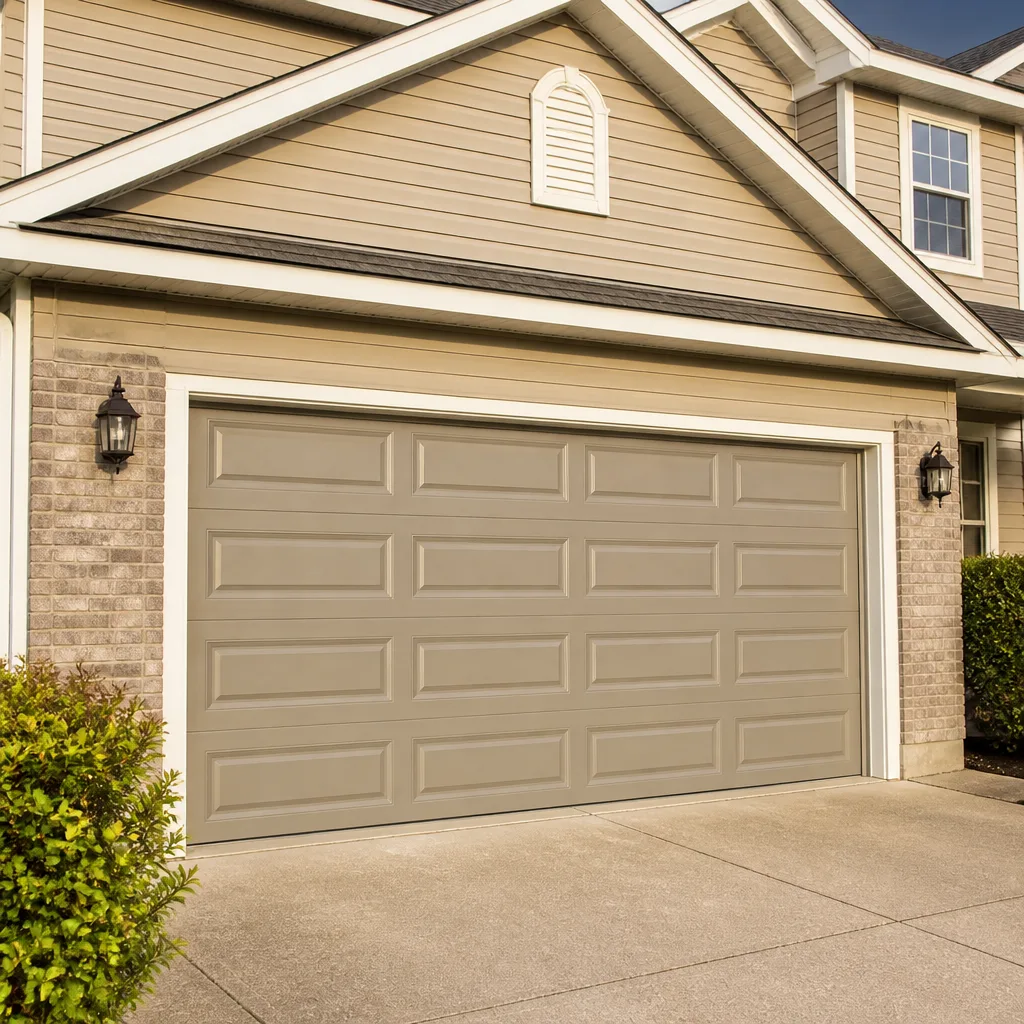 Raised-panel steel
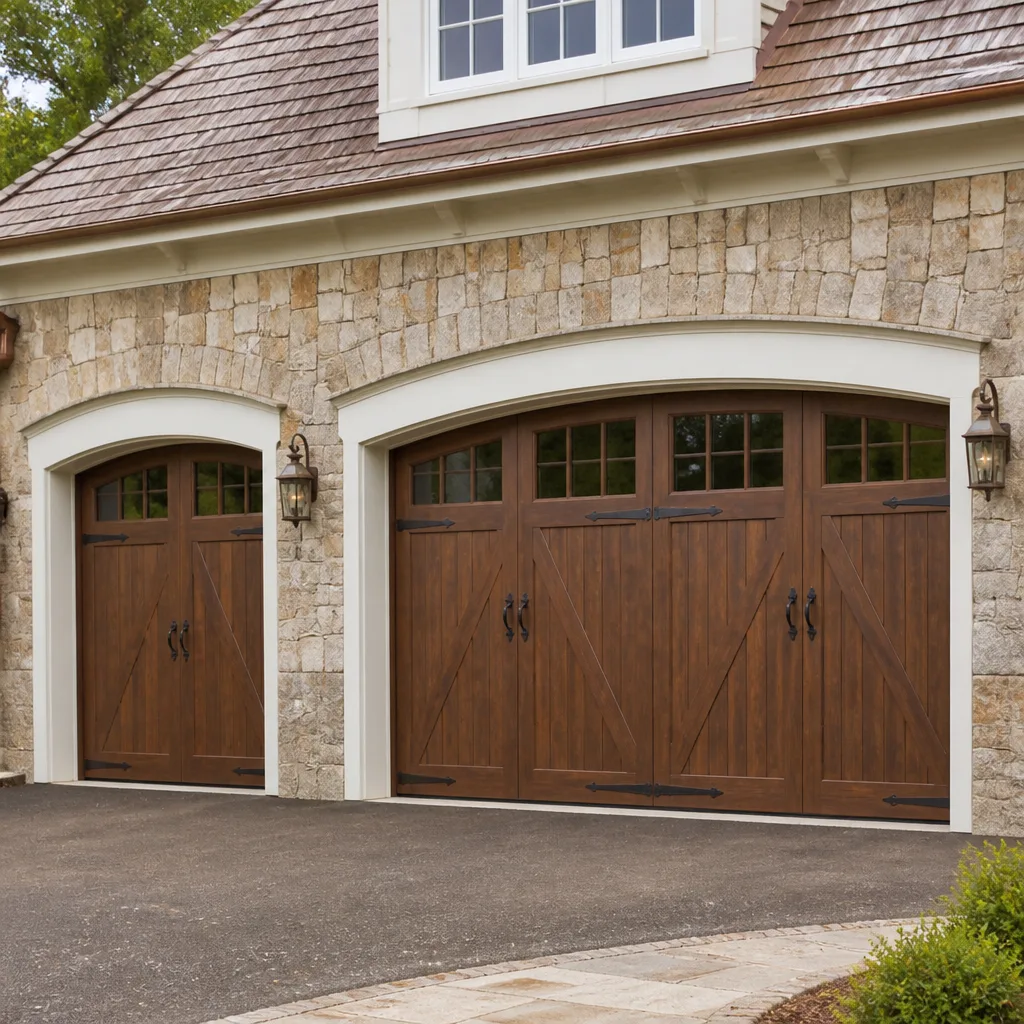 Carriage house
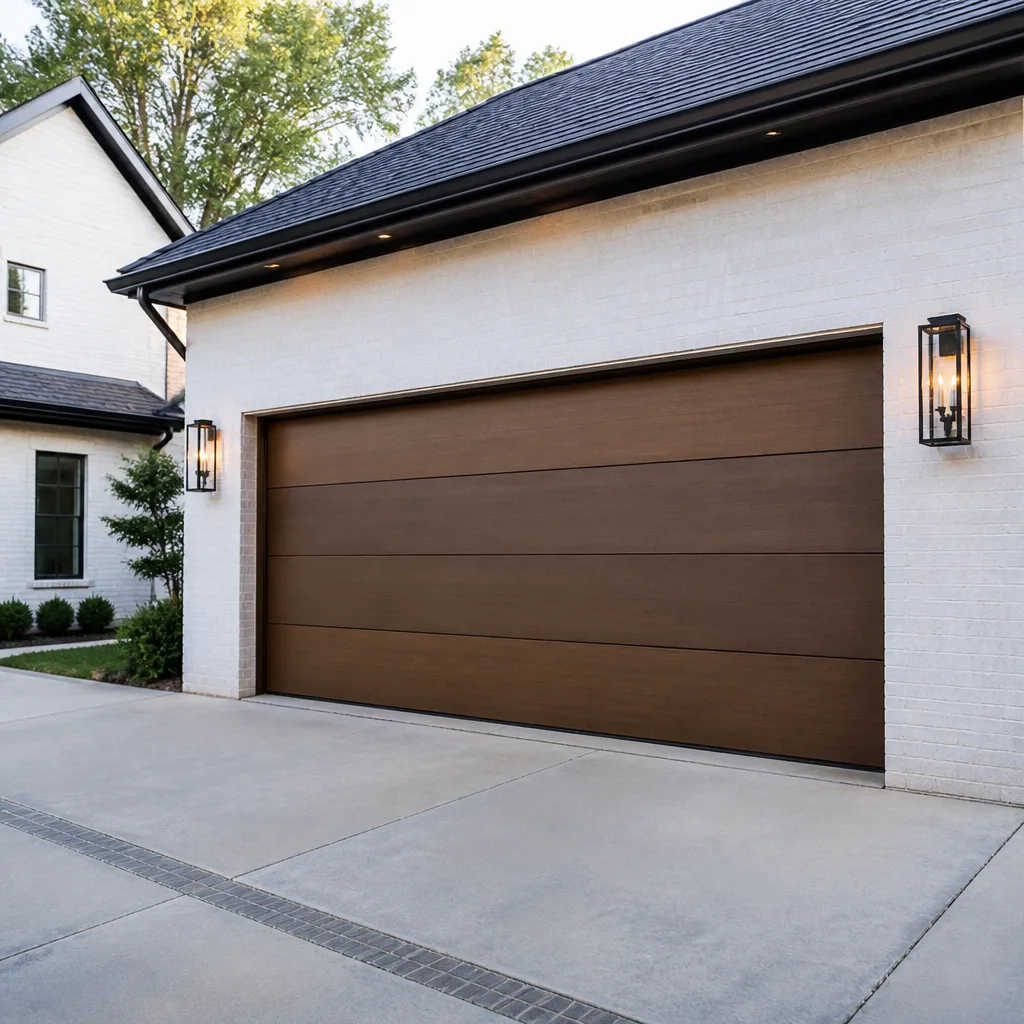 Modern flush
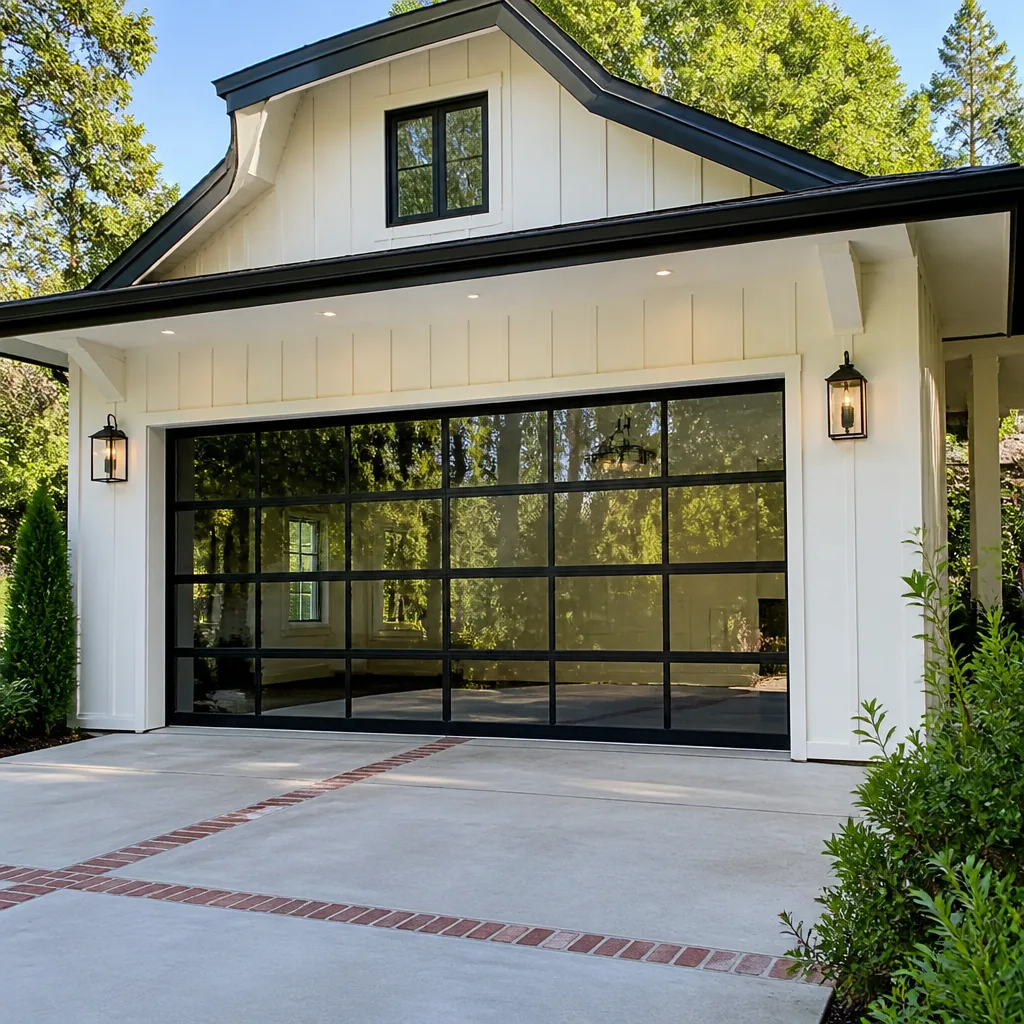 Full-view glass
 LiftMaster openers
 Chamberlain openers
Full 25-point door and opener safety check with every visit - springs, cables, rollers, tracks, and your LiftMaster or Chamberlain opener included
You get a price before we start. It does not change when the pro arrives.
Get your free estimateGarage Door Warning Signs: A Miami Gardens Homeowner’s Reference Guide
A garage door that’s “a little slow” in Miami Gardens isn’t the same low-priority issue it might be in Minnesota. High heat accelerates two things that quietly kill doors: lubricant breakdown and spring metal fatigue. That compresses the timeline from “watch it” to “it failed” far faster than most homeowners expect. The warning sign you dismiss in October has a habit of becoming a snapped spring in February. This guide walks you through the signs worth taking seriously, the sounds that mean different things, and a simple urgency triage so you know what to fix this week, what can wait for the month, and what to just keep an eye on.
Quick Answer
The most serious garage door warning signs are a door that reverses before closing, an uneven lift where one side lags, visible rust on cables or springs, and any loud grinding or banging from the opener or hardware. In Miami Gardens, heat and humidity shorten the lifespan of springs, cables, and lubricant, so a symptom that would be minor in a cooler climate deserves faster attention here. Signs involving springs, cables, or a door that won’t close should be treated as urgent and checked by a trained technician.
Styles & brands we work with
- Raised-panel steel
- Carriage house
- Modern flush
- Full-view glass
- LiftMaster openers
- Chamberlain openers
Table of Contents
- Why Warning Signs Escalate Faster in Miami Gardens
- Visual Warning Signs to Check This Weekend
- Sound-Based Diagnosis: Grinding vs. Scraping
- Operational Signs: Uneven Lift, Reversal, Remote Lag
- Warning Signs That Only Show Up During Rain
- Your Urgency Triage: This Week, This Month, or Watch
- When to Call a Professional
- Frequently Asked Questions
Why Warning Signs Escalate Faster in Miami Gardens
Garage doors in Miami Gardens live in a tougher environment than the same door would face a few hundred miles north. Year-round warmth means the lubricant on rollers, hinges, and tracks thins and migrates instead of clinging where it’s needed. Once that film breaks down, metal grinds on metal and the wear curve steepens. Springs, which are under constant tension, fatigue faster in sustained heat because the metal is working in conditions closer to its stress threshold all year.
Humidity does the rest. It finds the exposed steel in cables and springs and starts a rust cycle that’s easy to overlook until a cable frays. That’s why a homeowner who moved here from a cooler state often misjudges the clock: the symptom looks familiar, but the failure arrives sooner.
Three local factors matter most:
- Heat-driven lubricant breakdown makes rollers and hinges noisy long before they fail, which is actually useful if you listen.
- Spring metal fatigue in constant warmth means springs give warning less loudly than they do in cold climates before they snap.
- Humidity and afternoon rain stress wooden frames, seals, and any exposed metal, especially on older homes around neighborhoods like Andover, Norland, and Bunche Park.
None of this means a Miami Gardens door is doomed. It means the margin for “I’ll get to it later” is narrower. When a sign shows up, treat it as information, not background noise. Our Miami Gardens Garage Door Repair Pros page is a good starting point if you’d rather have a technician look before you decide.
Visual Warning Signs to Check This Weekend
You can spot most serious problems with your eyes before you ever hear them. Set aside ten minutes, open the door, and look closely at the hardware while it’s stopped. Do this in daylight with the door down, then again with it partway up so you can see the spring and cable connections.
Work through this checklist:
- Rust on springs and cables. A dusting of orange on a spring coil or cable end is a real signal, not cosmetic. In Miami Gardens humidity, rust on a cable often means the strands inside are corroding too, and a corroded cable is the one that fails without much warning.
- A gap or sag in the door panels. Look down the door from the side. If panels don’t line up, the door is twisting, which strains the springs and tracks.
- Bent or misaligned tracks. Run your eye along each vertical and horizontal track. A dent or kink that started as a bump can pull the door off its rollers.
- Frayed or kinked cables. Cables should look smooth and taut. Fraying, kinks, or slack mean it’s time for a professional.
- Worn rollers and hinges. Plastic rollers crack and metal ones wear flat spots. Hinges should be tight, not loose or squeaking.
- Weather seal damage. A cracked or detached bottom seal lets water and insects in, which matters more here than in a dry climate.
If you find rust on a cable or visible damage to a spring, don’t touch the door and don’t try to adjust anything. Springs and cables are under extreme tension and can cause serious injury. Our garage door spring repair service exists precisely because this is the repair that most often gets mishandled by well-meaning DIY attempts. A trained pro knows how to release tension safely.
Sound-Based Diagnosis: Grinding vs. Scraping
Your ears can separate a “schedule it soon” problem from a “call today” problem. The key is matching the sound to where it’s coming from.
A grinding sound from the opener housing or the rail usually points to a worn gear inside the opener, dry bearings, or a chain that’s loose or misaligned. On a LiftMaster or Craftsman opener, this is often a lubrication and adjustment issue that can be scheduled within the month. It’s annoying but rarely dangerous on its own.
A scraping, grating sound along the tracks or at the door’s edge is different. That’s metal dragging on metal: rollers seizing, a track bent toward the door, or a panel rubbing because the door is off balance. Scraping tends to escalate faster because it’s actively removing material every cycle. In Miami Gardens heat, a dry roller becomes a seized roller quickly. Treat scraping as a this-week problem.
A loud bang or snap followed by the door refusing to lift is almost always a torsion spring breaking. Stop using the opener. The door is now being lifted by the opener motor alone, which can burn the motor out or drop the door. That’s an emergency, and it’s why spring issues top our list.
Here’s a rough sound map to help you decide:
- Rattle or clatter: loose hardware or track brackets, usually a this-month fix.
- Squeal or whine: dry rollers or bearings, lubricate or service soon.
- Grinding from the opener: gear or chain wear, schedule it.
- Scraping along the track: alignment or roller failure, treat as this-week.
- Bang, snap, then no lift: broken spring, call today.
If the sound is coming from the opener and the door still moves, our garage door opener repair can usually diagnose it quickly across the brands we work on, including LiftMaster and Genie units.
Operational Signs: Uneven Lift, Reversal, Remote Lag
How the door behaves while it moves tells you about balance, safety sensors, and the opener’s health. Watch it through one full open-and-close cycle and note anything that looks off.
Uneven lift almost always means a balance problem: a fatiguing spring, a stretched cable, or a bracket that’s worked loose. If one side rises higher or faster, the door is straining the springs on the other side. In Miami Gardens, where springs are already aging under heat, this is the sign most likely to lead to a snapped spring if you wait. Balance issues are typically a this-week call.
Reversal during closing is the safety system doing its job. If the door reverses on its own before touching the ground, the sensors may be misaligned, dirty, or tripped by an obstruction, or the opener’s travel limits may need adjusting. Clean the sensor lenses first. If the reversal continues, the sensors or opener need professional attention. Don’t disable the safety reverse to “make it work.” That’s a serious safety feature.
Remote lag or inconsistent response usually points to a dying remote battery, an aging opener, or radio interference. On older openers it can signal the logic board is failing. If a new battery doesn’t fix it, have the opener checked. This one is rarely urgent on its own but can indicate a larger electronics problem.
A quick operational checklist:
- Does the door lift smoothly, or does it lurch and stall?
- Does it reverse, stop, or bounce back during closing?
- Does the door sit flush with the ground when closed?
- Is the opener’s light flashing a code? (Check your model’s manual.)
- Does the remote or wall button respond on the first press?
Any “yes” to lurching, reversal, or a non-flush close earns a call. The rest you can keep on a watch list.
Warning Signs That Only Show Up During Rain
Some problems are seasonal here, and they show up during Miami Gardens’ wet periods. A door that works fine in dry weather can misbehave after a stretch of afternoon storms. Watching for these patterns saves you from surprise failures.
Misalignment from humidity-swollen frames. Wooden jamb and frame components absorb moisture and swell. A track that was straight in the dry season can bow slightly, causing the door to catch. If your door scrapes or sticks only after rain, swollen wood is a likely culprit, and it’s worth checking the frame around the opening.
Water ingress under the bottom seal. A worn bottom seal lets water pool at the door’s base, which can rust the bottom panel and the threshold hardware. Check for dampness and rust streaks along the bottom edge after a storm.
Sticking after heavy rain. If the door hesitates on the first cycle after rain and then frees up, moisture and swelling or cold, stiff lubricant are the usual suspects. If it sticks every time regardless of weather, that’s a separate balance issue.
Sensor trips in wet conditions. Sun glare, fog, and storm spray can interrupt the safety sensors’ beam and cause phantom reversals. If it only happens in storms, the sensors may need repositioning or a shield.
None of these demand midnight panic. But a door that fails during a storm is more likely to leave you with a flooded garage or a security gap until the door is fixed. If your door misbehaves during rain repeatedly, that’s a pattern worth a service call rather than a shrug.
Your Urgency Triage: This Week, This Month, or Watch
Not every warning sign needs the same response. Here’s a simple triage you can use to decide how fast to act, framed for Miami Gardens conditions where heat shortens the timeline on spring and roller wear.
Fix this week (or today):
- Broken spring, or a door that won’t lift.
- Frayed or visibly rusted-through cable.
- A door that reverses or won’t close.
- Uneven lift or a door that’s visibly off balance.
- Scraping along the track or a bent track that’s pulling the door.
Fix this month:
- Grinding from the opener that still moves the door.
- Worn rollers or squealing hinges.
- Remote lag that a new battery doesn’t fix.
- Rust starting to show on springs but no failure yet.
Watch and schedule:
- Occasional minor squeaks that respond to lubrication.
- A worn weather seal that isn’t letting water in yet.
- Cosmetic dents that don’t affect movement.
The rule of thumb in our experience: if the sign involves springs, cables, balance, or closing, it moves up a tier. In Miami Gardens, the accelerated wear from heat means a “watch” item deserves a sooner check than you’d give it in a milder climate. When you’re not sure which tier a symptom falls into, a free estimate call settles it. When the door won’t open or won’t close, that’s an emergency, and we treat it that way.
See the difference
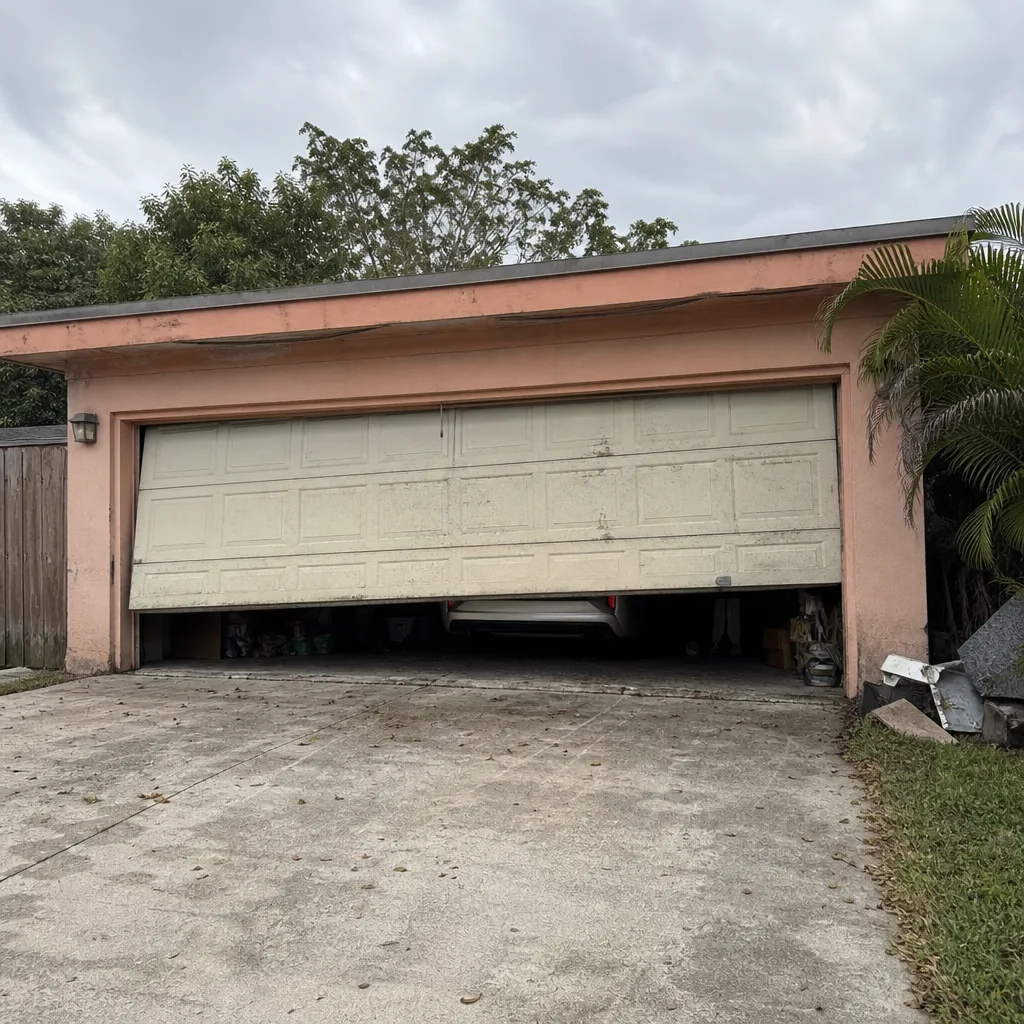 Before
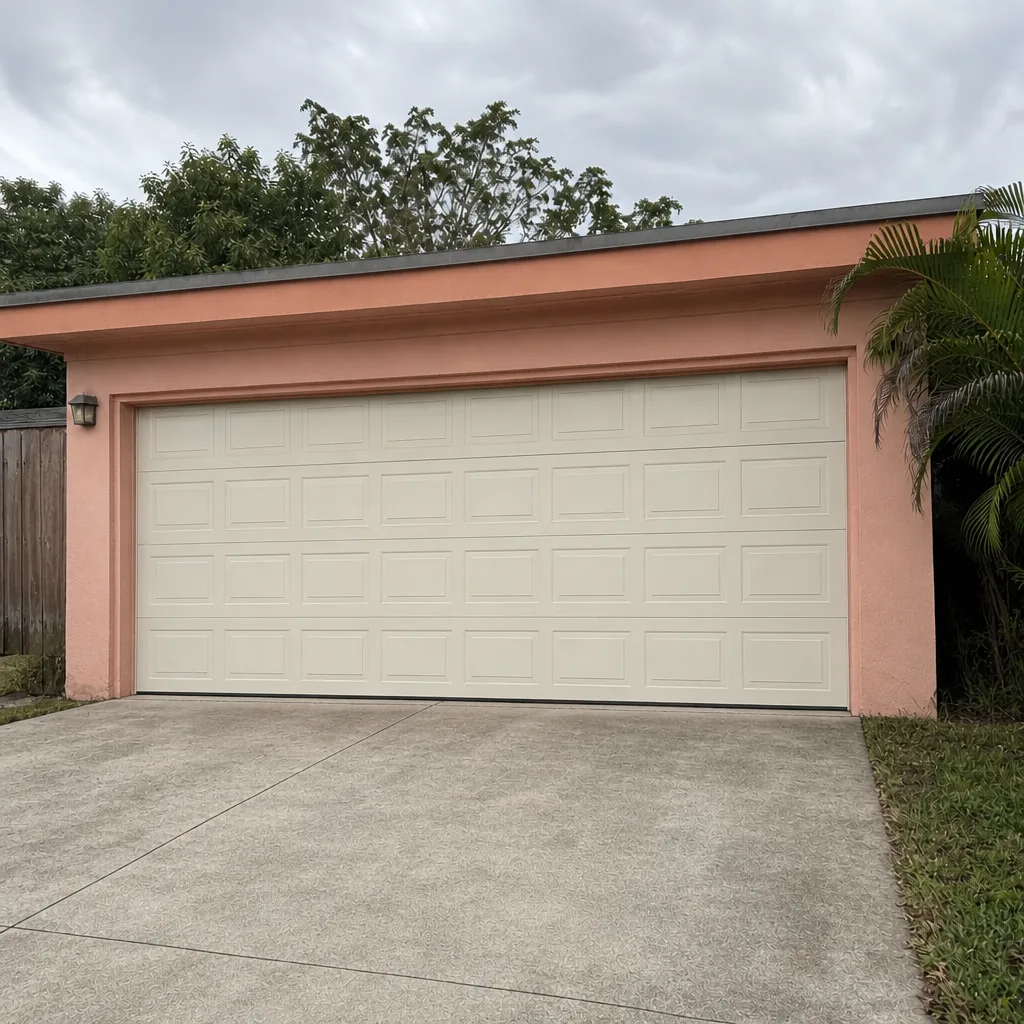 After
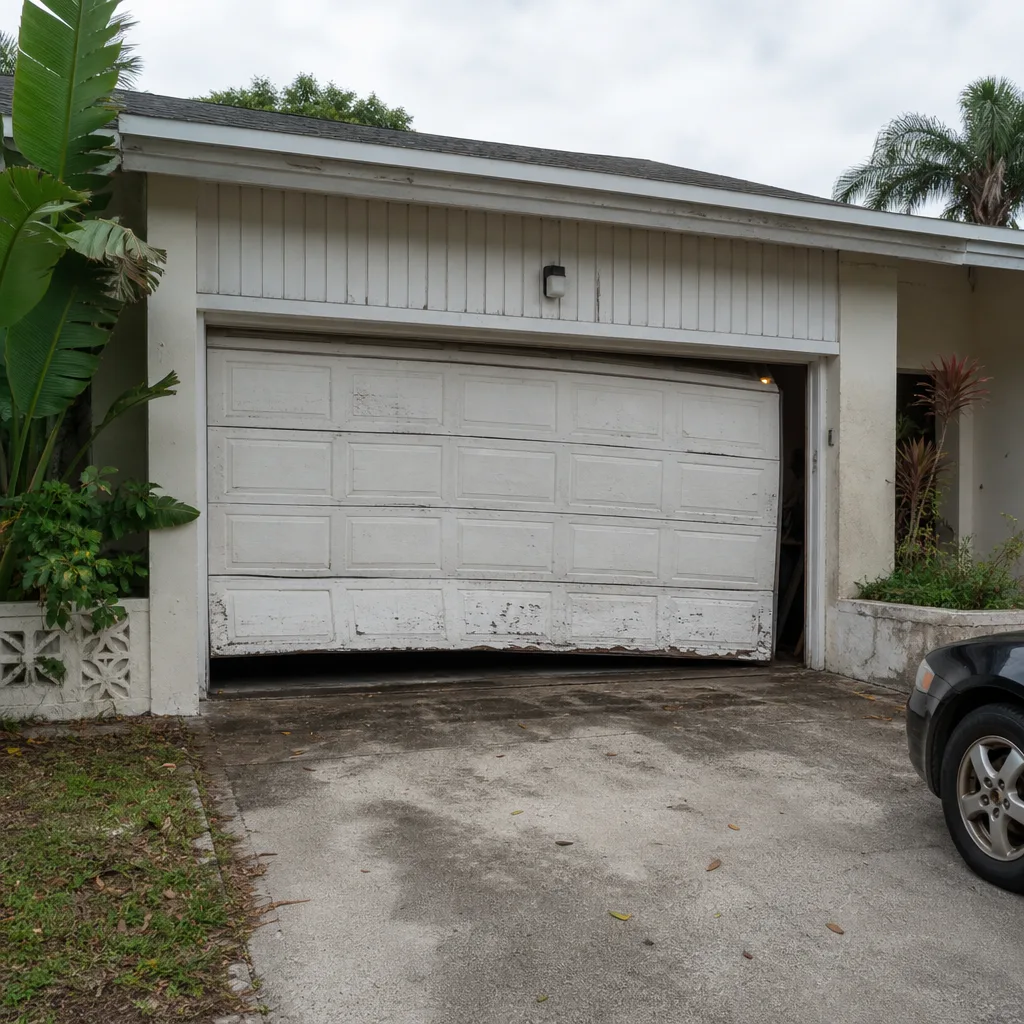 Before
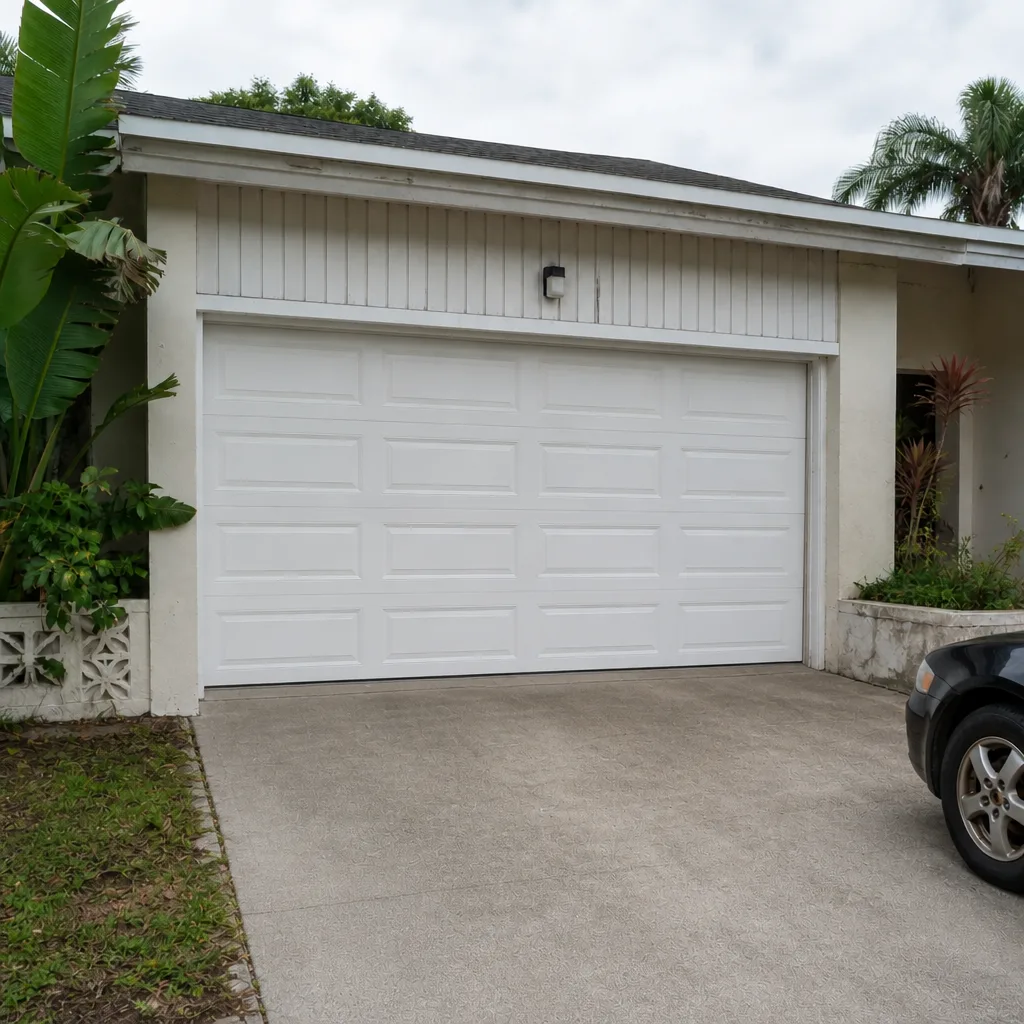 After
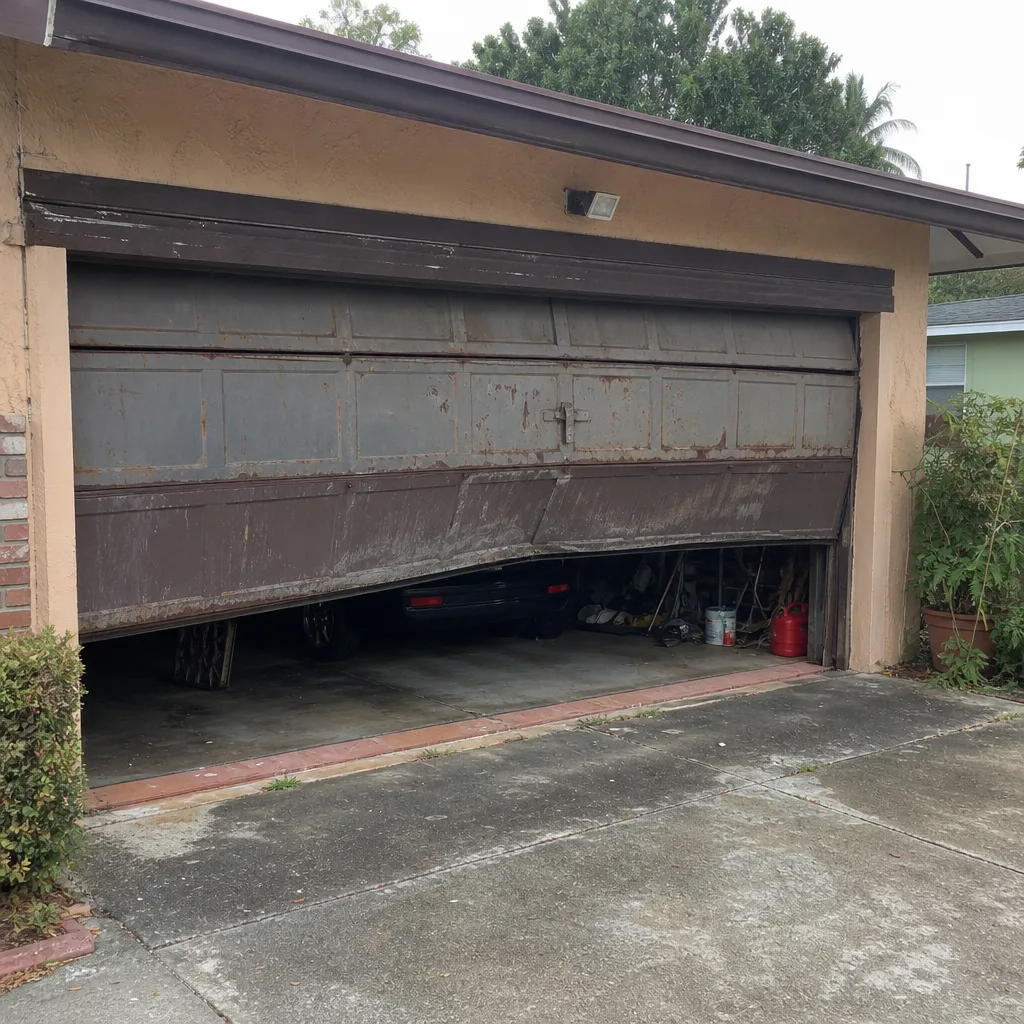 Before
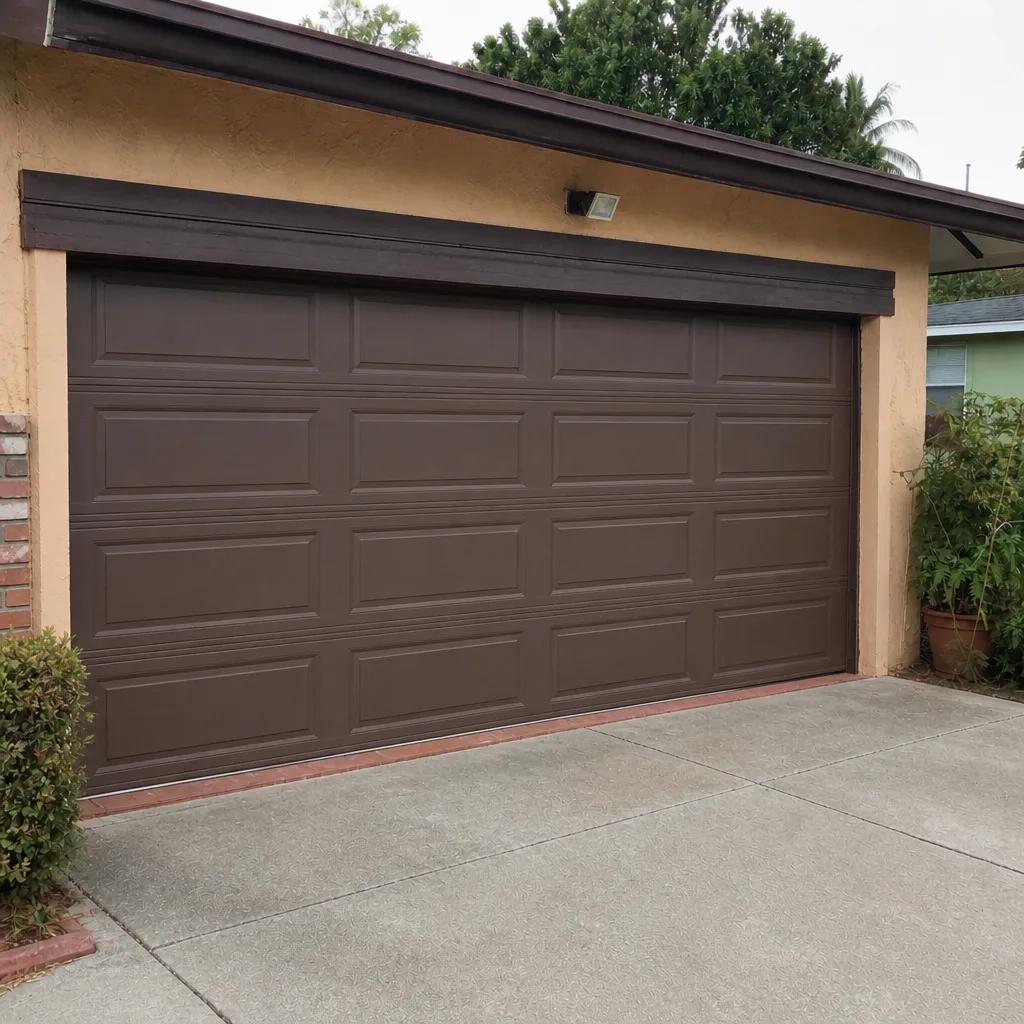 After
Common Mistakes to Avoid
- Assuming a slow door is normal. Slowness is often the first sign of a fatiguing spring. In Miami Gardens heat, that fatigue accelerates, so a slow door that’s “always been like that” can fail sooner than you think.
- Disabling the safety reverse to stop reversal. It feels like a fix, but it removes the feature that protects anyone standing under the door. Address the sensor or travel limits instead.
- Ignoring rust on cables and springs. Rust on exposed steel in this humidity often means internal corrosion. A cable can look fine on the outside while weakening inside.
- Trying to adjust a torsion spring yourself. This is the most dangerous DIY garage door job. Springs and cables are under extreme tension and can cause serious injury. Leave this to a trained technician.
- Oiling everything indiscriminately. Lubricating the wrong parts, like the torsion spring itself or the opener’s chain, can attract grit or cause binding. Stick to the rollers, hinges, and bearing plates your manual recommends.
- Waiting for a storm to prove a seal is failing. A worn bottom seal lets water in during Miami Gardens rain. Replace it before a wet stretch does damage to the door’s base.
- Hiring a generalist for a specialist repair. A handyman may not know the spring system on a Clopay or Wayne Dalton door. Garage door mechanics need the right tools and the right safety method.
When to Call a Professional
A few situations clearly exceed what a homeowner should handle. Call a pro if the spring is broken or you hear a snap and the door won’t lift, if a cable is frayed or has gone slack, if the door is off balance or one side lags, if the door reverses or won’t close reliably, or if a bent track is pulling the door off its rollers. These involve high-tension components or safety features, and a trained technician should handle them. For opener problems, a professional diagnosis saves guesswork, especially on branded systems like LiftMaster, Chamberlain, Genie, Craftsman, or a Wayne Dalton door and opener combination. Miami Gardens Garage Door Repair Pros offers free estimates in Miami Gardens, and our technicians have up to 12 years of experience. Call (833) 468-5952 to schedule.
Frequently Asked Questions
A door that won’t lift or a broken spring is the most serious, and a door that reverses or won’t close is a close second. Both involve either high-tension components or a safety feature that protects people and property. If you see either, stop using the door and call for help. Call (833) 468-5952 for a free estimate.
The sound tells you. A grinding or squealing from the opener or rollers is usually a this-month fix, while scraping along the tracks or a loud bang followed by a door that won’t lift means stop and call now. In Miami Gardens heat, dry rollers seize faster, so treat persistent noise as a reason to get it checked. Call (833) 468-5952 for a free estimate.
Humidity swells wooden frames and promotes rust on exposed cables and springs, while year-round heat breaks down lubricant and accelerates spring fatigue. Together they make misalignment, corrosion, and balance problems show up sooner here than in cooler climates. If your door misbehaves after rain or feels stiff, a technician can tell you whether it’s adjustment, corrosion, or wear. Call (833) 468-5952 for a free estimate.
Every job is different, so the honest answer is that it depends on the component, the door, and the cause. We give free estimates and quote the price before work starts, so there are no surprises. The written estimate sets the final price. Call (833) 468-5952 to schedule a free estimate.
Often yes, and the usual cause is swollen wooden frames, a worn seal, or stiff hardware that frees up once dry. A technician can identify whether it’s a seal, alignment, or lubricant issue and correct it. Call (833) 468-5952 for a free estimate.
We work on 8 of the most widely installed door and opener brands, including LiftMaster, Chamberlain, Genie, Clopay, Amarr, Wayne Dalton, Craftsman, and Raynor. That means we arrive familiar with the exact system in your garage. Call (833) 468-5952 for a free estimate.
The Bottom Line
Warning signs don’t need to be dramatic to matter. A door that’s slow, noisy, uneven, or sticky after rain is telling you something is wearing, and in Miami Gardens’ heat that wear arrives faster than it would elsewhere. Watch your door through one full cycle this week, match what you see and hear to the triage above, and act sooner on anything touching springs, cables, balance, or closing. The right fix, not just the fastest fix, is what keeps a door dependable. When in doubt, a free estimate removes the guesswork. Call (833) 468-5952 today.
Written by the team at Miami Gardens Garage Door Repair Pros.